


Materials Behind Agricultural Spraying Equipment
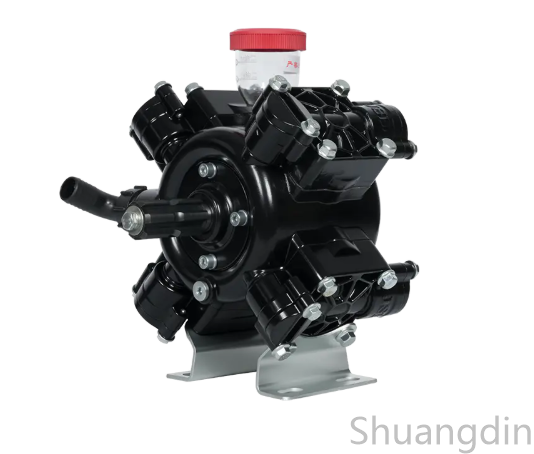
The development of agricultural spraying machinery requires a close relationship between mechanical construction and material technology. A diaphragm agricultural sprayer pump provides a fluid-transfer mechanism based on flexible membrane movement, but its practical role extends across the entire spraying system. The materials used for the membrane, valves, seals, and housing influence how the pump interacts with agricultural liquids and surrounding equipment.
The diaphragm creates the primary boundary between the fluid chamber and mechanical drive. When the membrane moves, it changes chamber volume and generates the conditions necessary for liquid movement. This process is coordinated through inlet and outlet valves, which direct the liquid through the intended pathway.
Material selection for the membrane involves several engineering considerations. The component must flex repeatedly while retaining its functional shape and separation capability. At the same time, contact with agricultural liquids can create chemical demands. Engineers can therefore consider chemical compatibility together with flexibility, fatigue behavior, and environmental stability when developing the diaphragm.
The valves require their own material assessment. Their function depends on repeated movement and controlled interaction with seating surfaces. Because they may directly contact the working liquid, their materials need to be appropriate for the intended environment. Manufacturing consistency can further influence valve response by maintaining predictable component geometry.
Sealing components form another critical interface. They help control the boundaries between different sections of the pump while accommodating the movement and assembly of surrounding components. Their material selection should account for fluid exposure as well as expected cleaning and maintenance conditions.
Housing construction supports the entire assembly. The housing contains the fluid chamber, supports internal components, and provides connections with the external fluid pathway. Agricultural equipment can operate in environments containing soil, dust, moisture, and cleaning substances. Housing materials should therefore be evaluated according to both structural requirements and environmental exposure.
Manufacturing processes determine how consistently these components can be produced. Diaphragm forming requires controlled material distribution and geometry. Valve components need reliable production quality, while housing and sealing interfaces must support accurate assembly. Process control across these stages can help maintain consistency throughout the finished pumping system.
Integration with the wider machine is another essential consideration. The pump may connect with a reservoir, filtration equipment, hoses, valves, and spray assemblies. These components create a complete route for the agricultural liquid. If one part of the system restricts or disrupts fluid movement, the effect can extend to the rest of the equipment.
Filtration can support the protection of internal components by managing unwanted particles within the liquid pathway. Agricultural fluids may carry residues that could affect valve operation or narrow passages. A properly designed filtration arrangement can become part of the broader material and mechanical strategy while remaining accessible for inspection and cleaning.
Maintenance technology should also influence equipment development. Regular flushing may be necessary to remove residues after spraying activities. Components exposed to the working liquid and cleaning process should be selected accordingly. Practical access to relevant parts can also help simplify inspection and routine service.
Automation adds a modern dimension to agricultural fluid systems. Electronic controls can coordinate application processes, while sensors may provide information about machine conditions. Despite these developments, the pump remains responsible for physically transferring liquid. Predictable mechanical movement therefore remains essential to the operation of the complete system.
A coordinated approach to membrane materials, valve construction, sealing technology, housing design, manufacturing processes, and fluid-system integration can help manufacturers develop agricultural spraying equipment around practical application needs. A diaphragm agricultural sprayer pump can become an integrated mechanical element within such equipment, while SHUANG DIN Co Ltd provides further information about its agricultural diaphragm pump solutions at https://www.agriculturaldiaphragmpump.com/about/.

 English
 Romaian
 Greek
Greek