


Europe’s EV Charging Race: Infrastructure Trends Shaping the Future
Why Europe’s Fast-Charging Network Needs Strategic Expansion
Electric vehicles are changing the economics and planning priorities of European transport corridors. As more drivers replace combustion vehicles, public charging becomes an increasingly important part of the journey experience. Fast charging is especially valuable for people who travel between cities, operate commercial vehicles, or lack convenient access to private charging. Its expansion is therefore becoming a strategic question for transport planners and energy stakeholders.
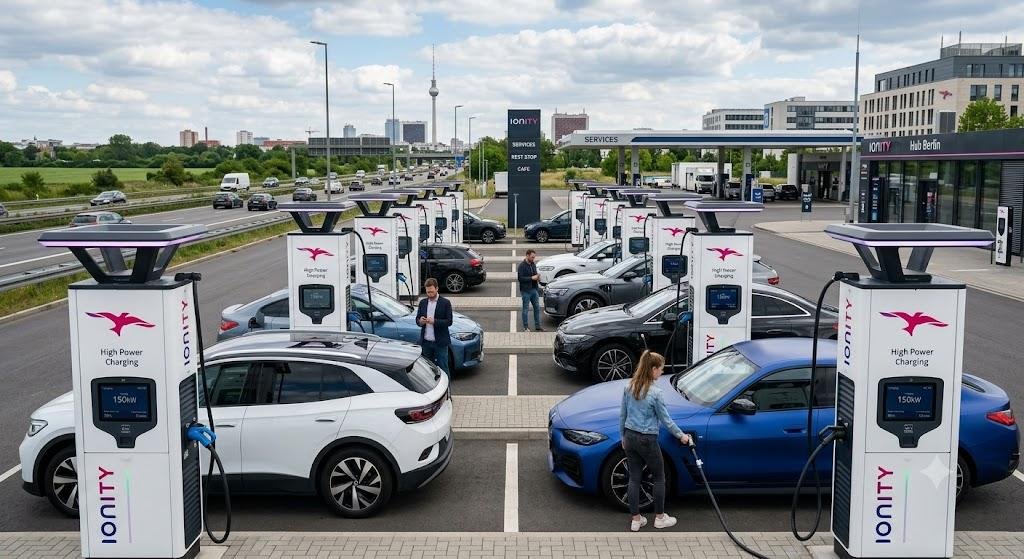
The strongest charging networks are likely to be built around use cases rather than simple installation targets. A busy motorway service area may require high-power chargers with several simultaneous sessions, while an urban retail location may benefit from a combination of fast charging and longer dwell times. Airports, hospitals, universities, tourist destinations, and business districts can each create distinct charging patterns.
Understanding these patterns helps operators choose equipment and capacity more effectively. Charger power should reflect expected vehicle demand, available grid capacity, and typical parking duration. Installing maximum-power equipment everywhere may not always produce the best financial result. A balanced portfolio can combine different power levels according to site characteristics and customer requirements.
Vehicle technology is also influencing infrastructure planning. Battery capacities are increasing, while charging systems are becoming more efficient and capable of higher power. As charging curves improve, drivers may spend less time at each stop, which can increase the number of vehicles a busy site can serve. Operators must therefore consider throughput rather than connector counts alone when evaluating network performance.
Public charging also has a strong regional dimension. Countries differ in electricity markets, permitting procedures, road networks, consumer behavior, and electric vehicle adoption. These differences create varied investment conditions. Mature markets may focus on replacing early chargers and expanding high-capacity hubs, while emerging areas may prioritize foundational corridor coverage and urban accessibility.
Policy remains an important catalyst. Public authorities can influence deployment through funding programs, infrastructure requirements, parking regulations, building rules, and transport strategies. Clear policy frameworks can reduce uncertainty and encourage private investment. At the same time, excessive complexity can slow projects by extending permitting and grid-connection timelines.
The Europe Public Fast-Charging Infrastructure Market Report provides a useful framework for understanding the broader market environment, but decision makers should also examine local conditions before selecting sites or technologies. National trends can identify opportunity areas, while detailed site analysis determines whether an individual project can achieve sustainable utilization.
Digital platforms are becoming central to this process. Operators need software that can display charger availability, manage payments, analyze energy consumption, monitor equipment health, and coordinate maintenance. Drivers increasingly expect accurate real-time information, because arriving at a nonfunctional charger can undermine confidence in the entire network.
Reliability may become one of the most important competitive factors. Public charging infrastructure operates in demanding environments, and equipment can experience communication failures, connector problems, vandalism, weather exposure, or electrical faults. Preventive maintenance, remote diagnostics, spare-parts planning, and rapid service response can improve uptime and protect customer satisfaction.
Commercial fleets provide an especially attractive opportunity because their charging needs are frequent and measurable. Delivery vans, taxis, rental vehicles, and service fleets can use public fast chargers when depot capacity is insufficient or routes extend beyond normal operating areas. Long-term agreements with fleet operators can provide more predictable demand.
Investment strategies are consequently becoming more sophisticated. Developers can evaluate sites through traffic volumes, electric vehicle penetration, competitive density, grid availability, land costs, and projected utilization. They can also model future scenarios to understand how changes in vehicle adoption or charging behavior might affect returns.
The future of European public fast charging will depend on coordinated decisions across transport, electricity, real estate, and technology sectors. Networks that combine well-positioned sites, adequate power, dependable operations, and simple customer experiences can support faster electric vehicle adoption. The opportunity is substantial, but long-term success will depend on building infrastructure that works efficiently in everyday conditions, not merely expanding headline charger numbers.

 English
 Romaian
 Greek
Greek