


I Drove the 1994 Chevrolet Impala SS Again in 2026, and This Corvette-Powered Sleeper Still Rules
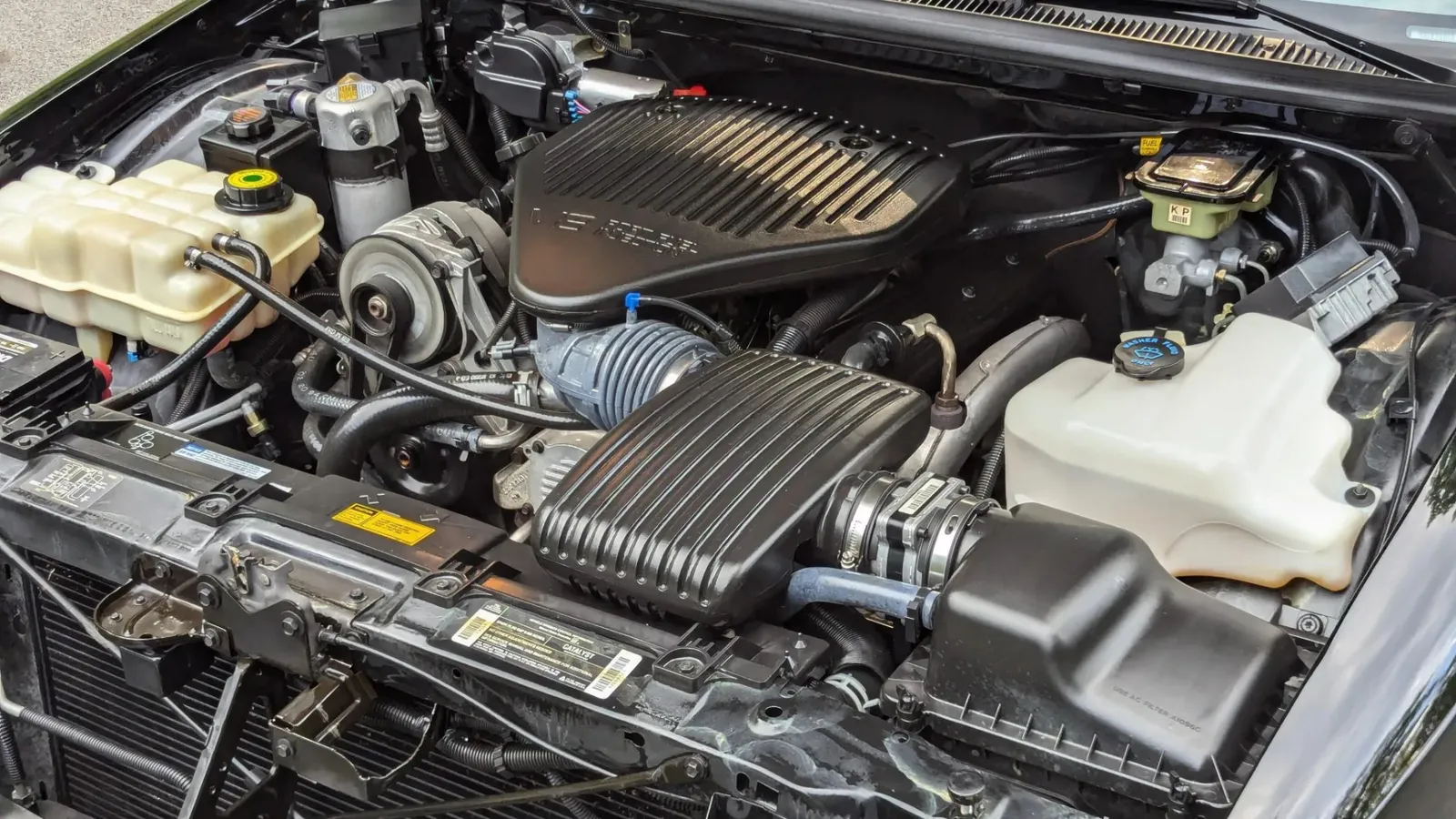
Stepping into the 1994 Chevrolet Impala SS today feels like sliding behind the wheel of a forgotten prophecy. The automotive world of 2026 is dominated by silent electric hypersedans, autonomous pods, and crossovers that all look like they were designed by the same algorithm. Yet here I am, cranking the key of a 32-year-old, all-black American sedan that smells of leather, old gasoline, and unapologetic attitude. The dash lights flicker to life without a single touchscreen in sight, and the 5.7-liter LT1 V8 barks to life with a rumble that vibrates through the floorpan. This is not just a car; it’s a time machine to an era when excess was measured in cubic inches, and a company CEO could roll into a board meeting with a Corvette heart beating under the hood without anyone in the parking lot being the wiser.
The 1994 Impala SS is the ultimate sleeper – a term we throw around too casually these days, but back in the early ’90s it was a genuine wolf in sheep’s clothing. I have always been fascinated by the quiet predators of the automotive kingdom, and this Chevy remains the gold standard. Imagine a time when the streets were flooded with Ferrari Testarossas and Lamborghini Countachs, their wedges slicing through traffic like neon-drenched spaceships. Stockbrokers with brick-sized mobile phones and NBA superstars flaunted their success with ostentatious mid-engine exotics. And then there was the Impala SS: a colossal, 214.1-inch-long four-door that shared its basic silhouette with the taxi-spec Caprice and police cruisers. Unless you spotted the subtle decklid spoiler, the 17-inch alloy wheels, or that menacing monochromatic grille, you’d never guess it packed the same LT1 engine family that motivated the C4 Corvette and Camaro Z28. It was the automotive equivalent of an accountant who could bench-press 400 pounds.
The creation story of this machine reads like a skunkworks fairy tale. By the early ’90s, the Chevrolet Impala badge – once a glitzy jukebox on wheels in the late ’50s and the boxy darling of the early muscle-car era – had faded into obscurity. The SS (Super Sport) heritage, legendary since 1964 with its 409 big-block, had been euthanized by emissions regulations and fuel crises. The bulging, chrome-laden Caprice that debuted in 1991 was competent but terminally uncool; it looked like a retired district attorney’s car, with droopy rear wheel arches that exaggerated its massive rump. Chevy executives were staring at a sales disaster, but a few rogue engineers saw a blank canvas. They raided the parts bin, borrowed the 9C1 police package suspension, cooling, and brake upgrades, and then dropped in the iron-head version of the LT1 V8. When the concept appeared at SEMA in 1992, it sent shockwaves through the gearhead community.
The key design move that transformed the Caprice into the Impala SS was lifting those sagging rear wheel openings and introducing a crisp Hofmeister-kink reminiscent of BMW. Suddenly, the whole body found its balance – aggressive, planted, and as moody as Robocop’s Ford Taurus. For the inaugural 1994 model year, the SS was offered exclusively in black with a gray leather interior, creating an aura of menacing sophistication that immediately resonated with a counterculture looking for something other than European flash. I vividly recall seeing one in a music video from that decade, prowling through an industrial district, and even then I knew this car was broadcasting a different kind of wealth – one that whispered instead of screamed.
Let’s talk about numbers that still matter in 2026. The LT1 in the Impala SS uses iron heads and a torque-biased camshaft compared to its Corvette sibling, producing 260 horsepower and a chunky 330 lb-ft of torque. Yes, that’s the output of a modern entry-level turbo-four, but numbers never tell the full story. Mated to a 4L60E four-speed automatic and channeled through a standard limited-slip rear differential, the 4,300-pound leviathan lunges off the line with a deep-chested growl. I’ve timed the 0-60 mph sprint repeatedly, and the 6.5-second figure from original tests still holds true; the quarter-mile arrives in 15.3 seconds. What’s more impressive in today’s world of instant electric torque is the deliberate, muscle-bound way the speed builds. The steering is slow and heavy, the suspension soaks up pavement imperfections like a luxury liner, and the four-wheel disc brakes from the police package provide surprisingly modern stopping power. You don’t drive this car – you command it.
Inside, the SS is all business. The cabin wraps around you with a bench seat that could comfortably ferry three adults or serve as a mobile office. The analog gauges are clear and uncluttered, and the column shifter might feel archaic to Gen Z drivers accustomed to rotary dials, but to me it’s pure nostalgia. There’s no sport mode button, no adaptive dampers – just a heavy right foot and a drivetrain that rewards commitment. In 2026, driving something so analog is a detox from the constant connectivity of modern cars. Every input requires intent, and the feedback is mechanical poetry.
Sales figures underscore the sleeper’s slow-burn success. GM shifted only 6,300 units in 1994, but when Dark Gray Green and Dark Cherry Metallic joined the palette in 1995, sales exploded to over 21,000. By 1996, the final year before the B-body platform was axed, another 42,000 found homes. The car’s premature death in 1996 only amplified its cult status. Three decades later, the Impala SS has been canonized in hip-hop culture and among enthusiasts who value stealth performance over supercar flash. Atlanta rapper and activist Killer Mike is one of its most vocal celebrity fans, often referencing the car as a symbol of understated power. I’ve attended grassroots car meets where a mint Impala SS draws a crowd that rivals any exotic, precisely because survivors are becoming rarer each year.
Speaking of rarity, the valuation trajectory fascinates me. According to Hagerty, a well-kept 1994 Impala SS in 2025 commanded an average of $18,300, with the subsequent model years holding steady. By early 2026, I’m seeing clean examples creeping toward $22,000 to $25,000 as younger collectors realize they can own a piece of Corvette-powered history for less than the cost of a lightly optioned Honda Civic. To put that in perspective, a 1961 Impala SS with a 348-cubic-inch V8 will set you back north of $70,000. The ’90s version remains one of the most accessible entry points into the muscle sedan club, but I don’t expect that window to stay open much longer.
What strikes me most every time I slide out from behind the wheel of this 1994 Impala SS is how it embodies a philosophy the industry has lost. It was built out of desperation, parts-sharing, and a stubborn refusal to let a legendary nameplate die. It isn’t perfect – the fuel economy is abysmal, the turning circle is that of a city bus, and the plastic interior bits rattle over rough roads – but it possesses a soul that no amount of over-the-air updates can replicate. For anyone reading this in 2026 who craves a connection to a rawer, more honest era of motoring, the Impala SS isn’t just a classic; it’s a necessity. I plan to hold onto mine for another three decades, silently smoking the tires away from every stoplight while the world buzzes around me in autonomous cocoons.
Sources: Hagerty.com valuation data and historical insights.
For enthusiasts eager to expand their automotive passion or dive into other hobbies, finding the right deals can be just as thrilling as hunting for a classic car. Whether you're searching for tools to maintain your vehicle, collectibles to complement your garage, or even games to unwind after a day on the road, having the right resources at hand makes all the difference.
One such resource is a steam sale tracker, which helps gamers discover the best discounts on their favorite titles. It’s a great way to explore virtual driving experiences or any other interests that fuel your downtime, reminding us that passion—whether it’s for cars or gaming—can take many forms.

 Romaian
 Portuguese (Brazil)
 Greek
Greek